Christmas has always been a special time for me. It’s about family, togetherness, and the small moments that make you feel grounded. Growing up as immigrants in this country, our sense of community often came from a local church. Winters in Bartlesville were cold, but they felt warmer because of the people around us. Church members checked in on our family, made sure we were doing okay, and helped ensure that Thanksgiving and Christmas were filled with kindness and cheer. That experience later inspired a song I wrote called “Empathy,” which reflects the kindness and support we received during those early years.
I met Bill through a local photography club many years ago, and I’ve always been impressed by his work. But it’s his Christmas cards that have stayed with me the most. Each year, when I receive one of his cards featuring a church window, it takes me back to my roots and reminds me how much those early experiences shaped my view of community, generosity, and gratitude. There’s a sense of peace in them that feels familiar.
Only later did I realize that the feeling these cards gave me was exactly what Bill was hoping to share. In this Q&A, Bill walks through his photography journey, his Christmas card tradition, and the thoughtful process behind each card. It’s a conversation about photography, craft, and the quiet meaning behind a tradition that continues to bring light and warmth into the lives of others.
Tell us a little about yourself. Where you’re from, what you do, and how photography became part of your life.
My work life was spent in telecommunications engineering, product management and sales. I’ve been photographing off and on for almost 70 of my 78 years – taking it seriously for more than 50 of that.
As a youngster, the family moved around quite a bit because of my father’s career in the Marine Corps and his assignments. Upon return from one of his overseas deployments he showed us the slides he had taken and I was intrigued.
He let me use his camera (a manual, 35mm rangefinder), explained the “Sunny 16” rule and I was off and running. Well, limping would be more accurate. Fast forward 15 years and I was doing my engineering job in the Pacific Northwest. There I found beautiful subjects to photograph (when I had some time). And it was there that I became really hooked on landscape photography. That interest expanded into macro and night-sky photography and other things that caught my interest. I am still learning to “see” as I photograph.
How did your annual Christmas card tradition begin, and what inspired you to start making your own cards each year?
Getting into photo printing actually led me to doing various greeting cards as a way to share hard-copy versions of some of my photos with more people.
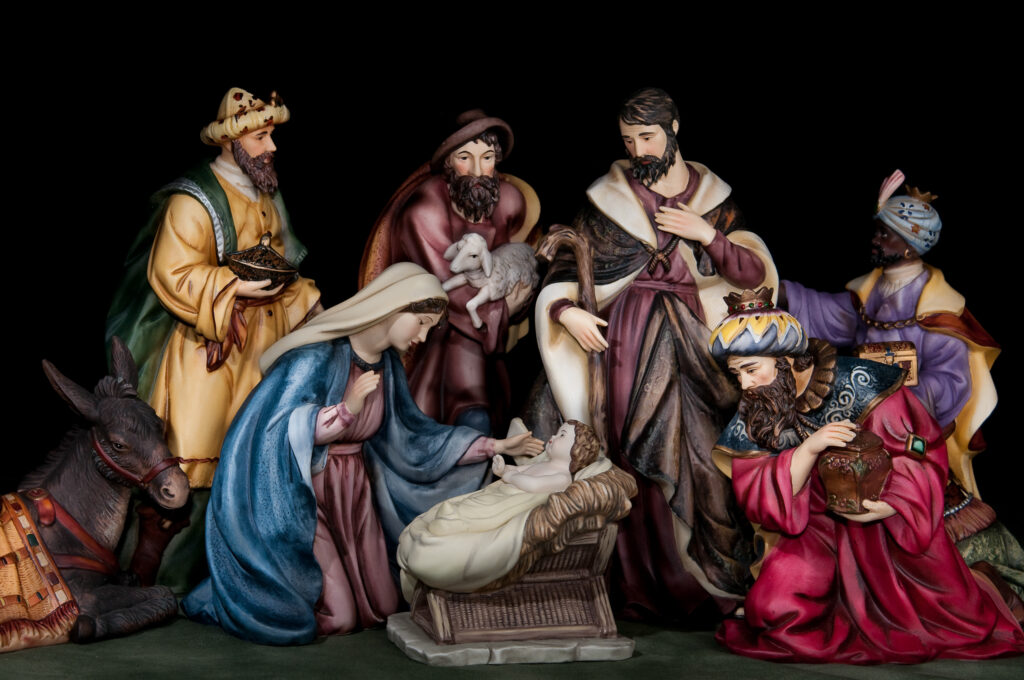
After doing general-purpose cards, I added Christmas cards. It started with a photo of an outdoor Nativity scene and then the next year it was one of our own table-top Nativity sets. I did several cards using photos of table-top Nativity sets before I happened to notice my first stained-glass window and realized it would make a nice card.
What is the story behind that first window you used for a card?
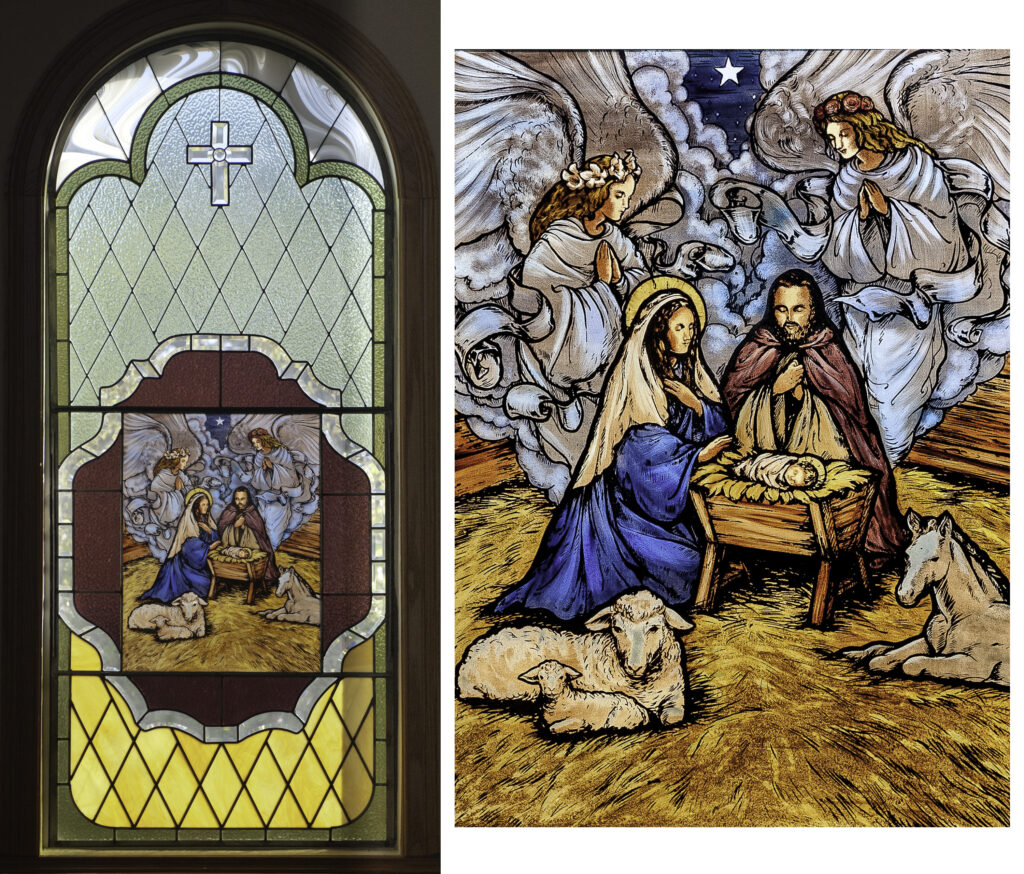
It was pure serendipity. A Romanian Orthodox church near me was holding its annual festival celebrating their culture with food, dancing, music and more. I was there hoping for some good photos of motion, color and people’s interactions (and to enjoy some of the food). The church building was open and as I wandered in I saw a window depicting the nativity scene. Photography was allowed and this window became the first of many stained-glass window subjects for our cards. It was a relatively simple window, but it sparked the idea for many cards to come.
When you start planning a new card, what do you think about first: the idea, the location, or the message you want to send?
The message of my cards is the most important thing, of course, and that is all about Peace, Love, Joy and Hope. These are things that are basic to everyone’s happiness and well-being, no matter what religion (or none) they may practice. While the nativity image I use is a Christian symbol, my intended message is universal. Given that I try to use a different stained-glass window each year, the next most important consideration has to be location, or more accurately, availability. So, I research churches on the web, talk to people about what they have seen or if they have stained-glass windows in their church and then I schedule a visit to take the photo.
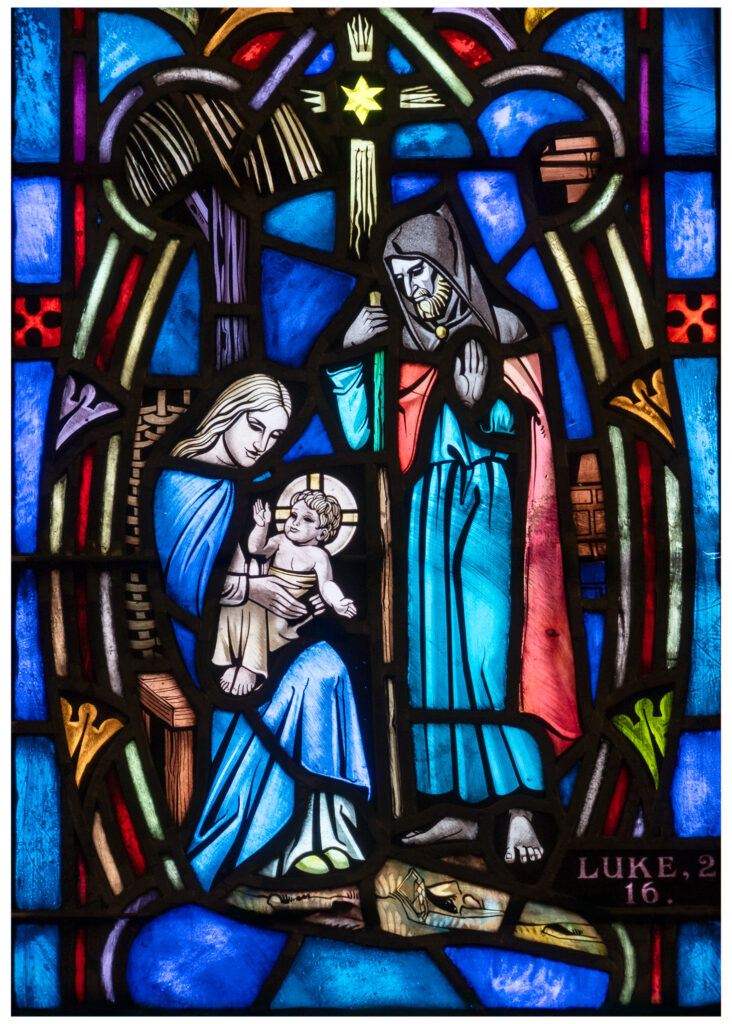
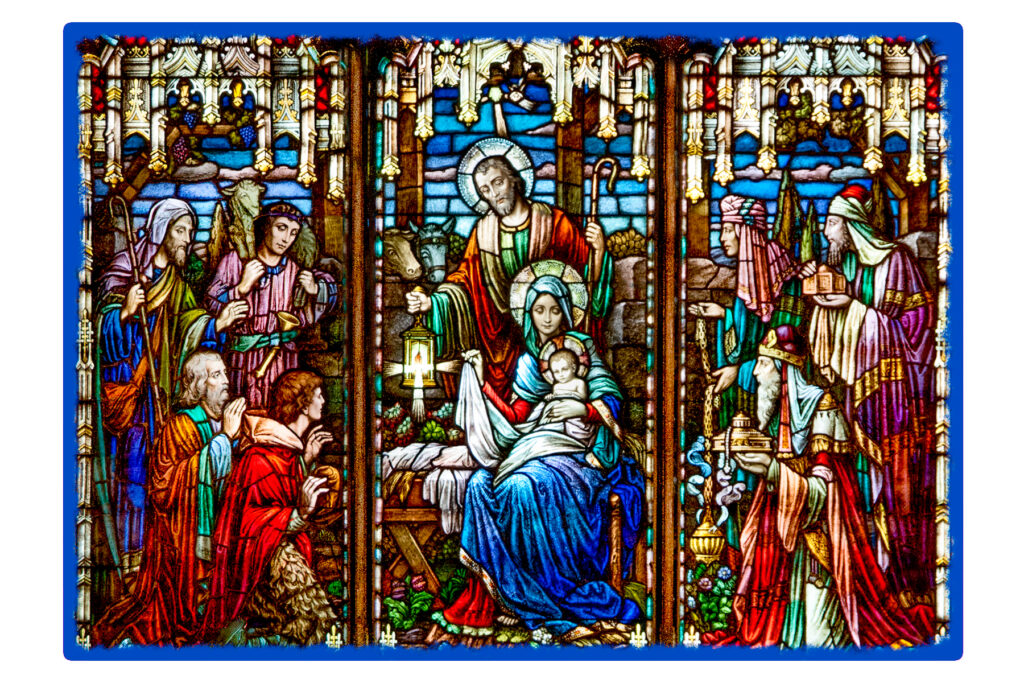
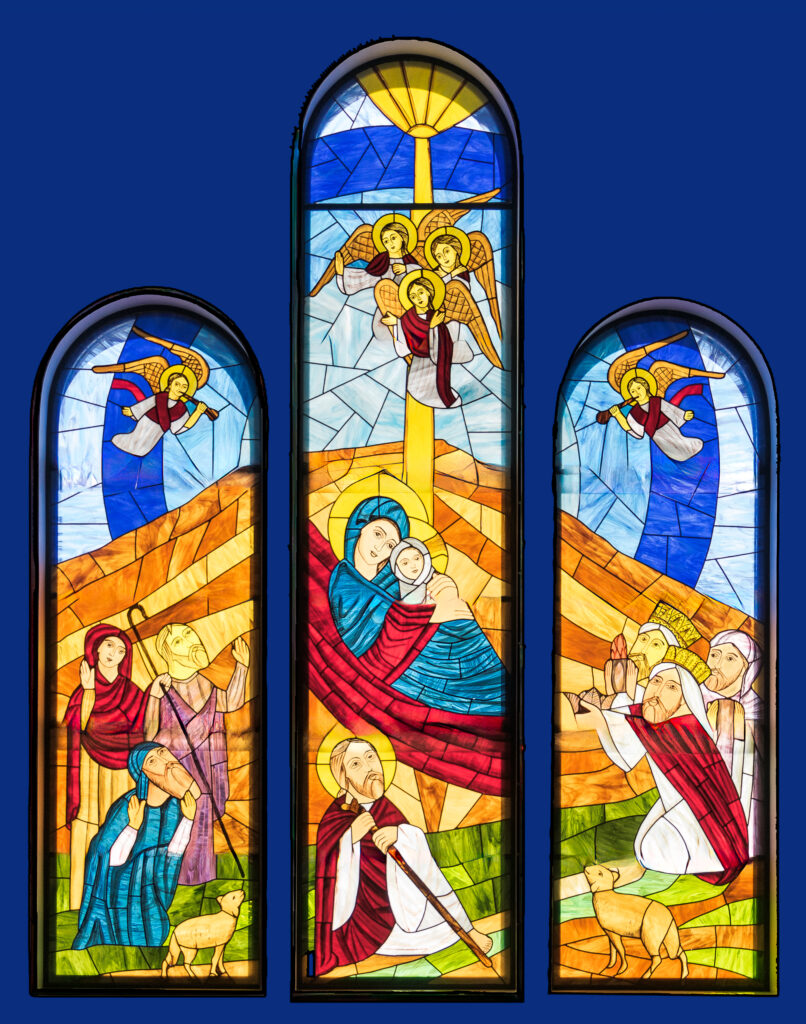
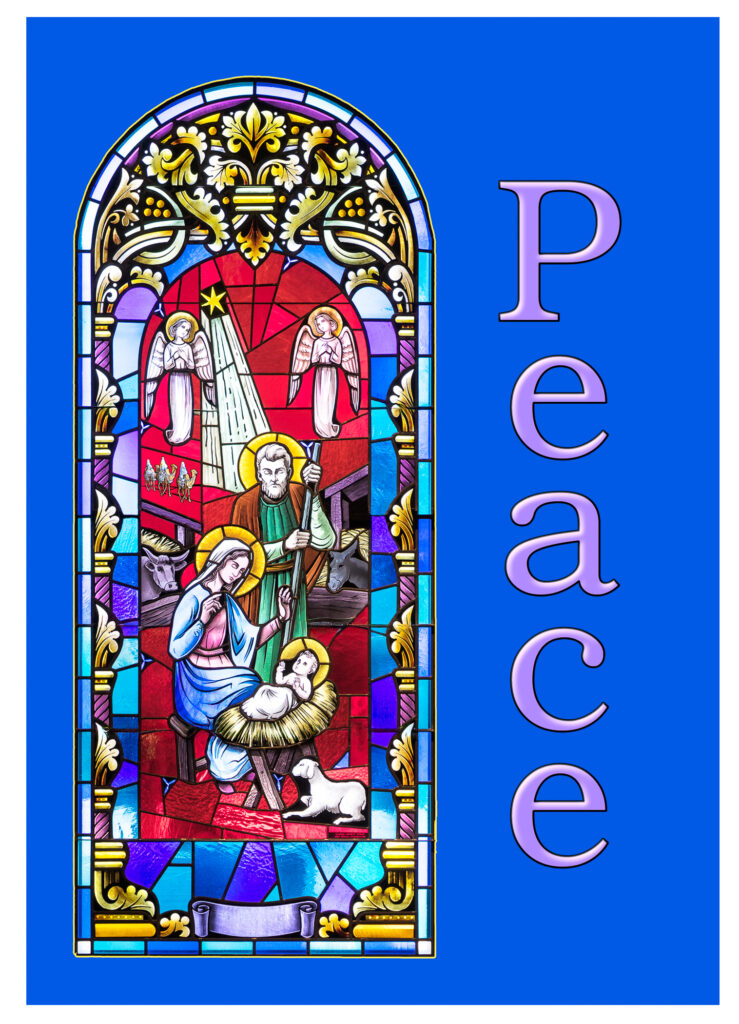
Finding the “right” window is harder than I thought it would be. The right window for my purposes is an artful presentation of the nativity scene we’re all familiar with. Old-school graphic, pictorial windows are my favorites, but I’ve used some more modern ones and really liked them, also. Examples are [Photo 4] and [Photo 9].
What do you enjoy most about photography, and how does that passion show up in your Christmas card project?
Great question. To me, the photographic art is not just about capturing an image but presenting that image in a way that lets the viewer feel a bit of what I did when I took the photo. In the case of my Christmas cards, they should reveal a bit of the beauty and majesty of the scene; the light revealing what the artist (sometimes over 100 years ago) wanted to convey and cause the viewer to look at it carefully, noticing all of the elements of the Nativity story. That said, the windows viewed in place in a gothic or even in a modern sanctuary will most often evoke a different sense of the scene than the card can convey but I try to capture some of that.
Walk us through your process. How do you go from an idea to a finished, printed card in someone’s mailbox?
The process starts with finding a window with the nativity scene and making arrangements to get in and photograph it.
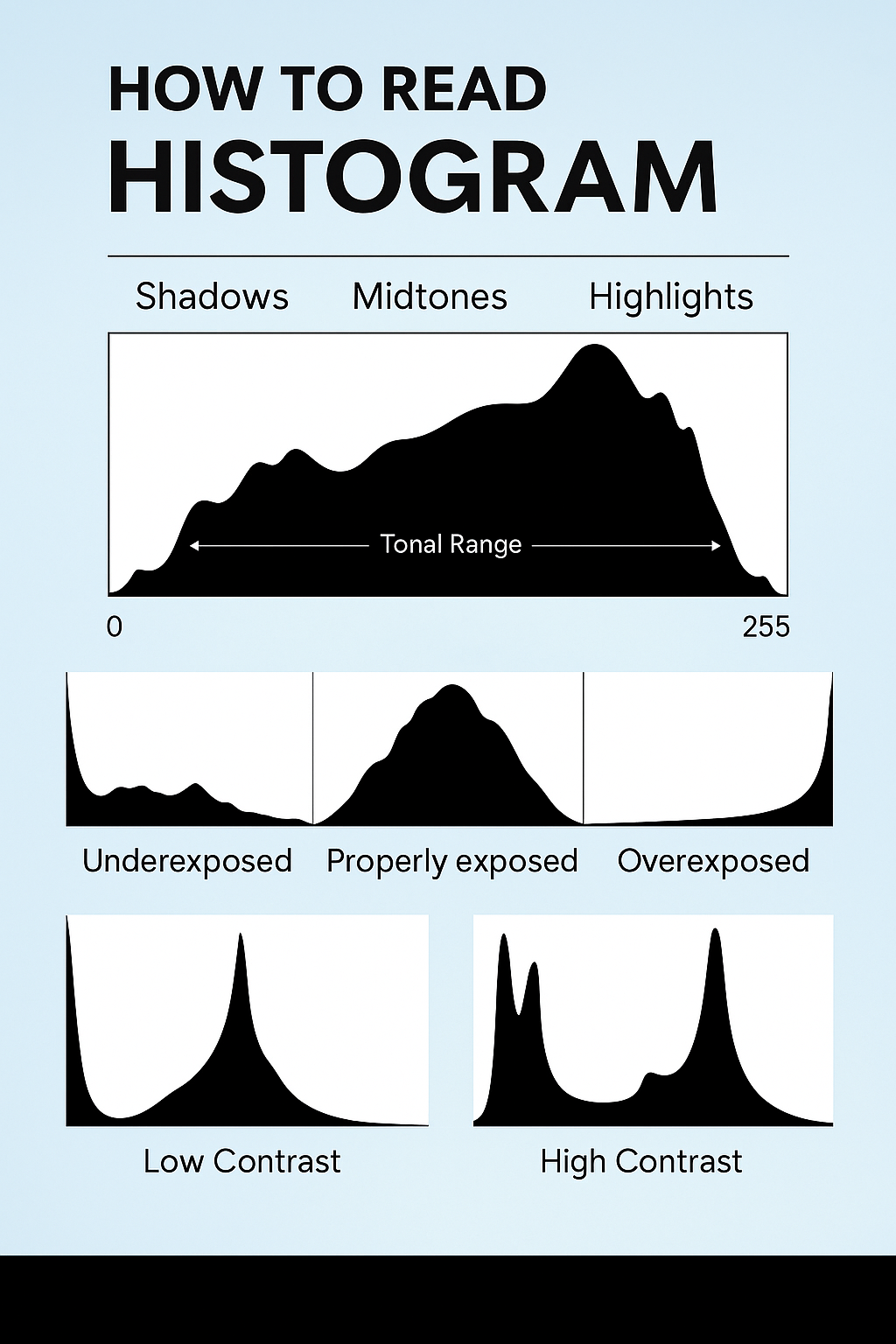
Next, capture the photo, being sure to get a high-resolution image because it will need to be cropped for the particular card design. After capturing the entire window, I zoom in to frame the area I’m most likely to be using for the card front and capture images of that portion. Usually I take a 5-frame bracket (-2, -1, 0, +1, +2) to ensure I have a good exposure of the entire window.
In Adobe Lightroom Classic the selected frame is edited for exposure, white balance, etc. A note about white balance and color temperature: stained-glass windows are always backlit with blue light (the sky) so I have to find something in the window that should be neutral or white and I color balance using that. Usually there is a white robe or shawl in the scene to use as a starting point.
Now it’s time to take the image into Photoshop to remove the supporting iron work and some of the heavy seams that run across the window, rebuilding what was obscured by those bars. We don’t seem to notice those too much when viewing the large window in place, but when a small portion is printed on the front of the card they are very noticeable and distract from the image. Check out the before-and-after below.
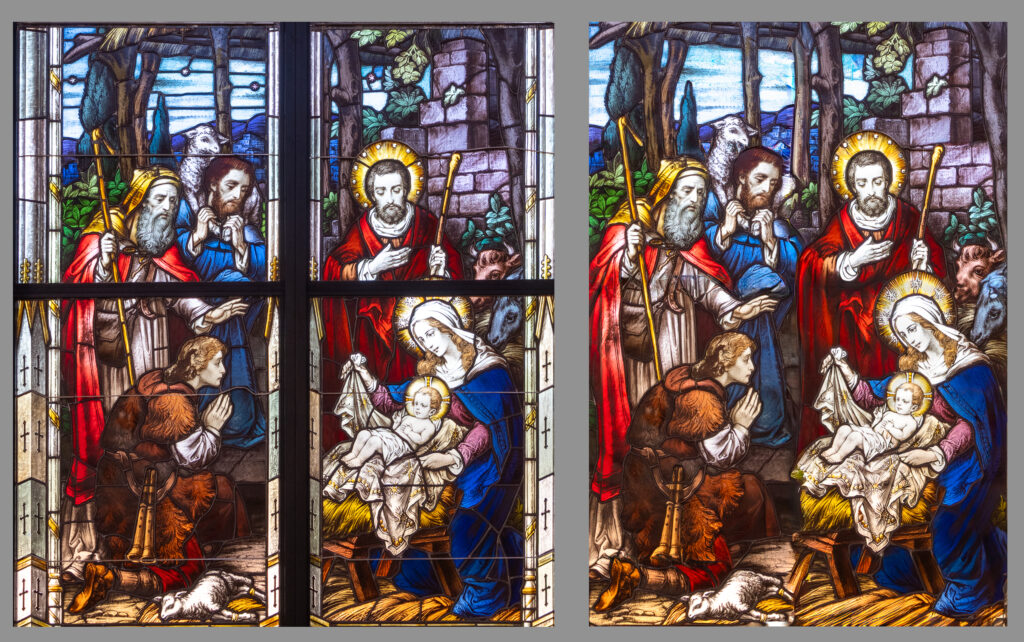
With that done, the image is cropped to fit the card size and orientation. Because I treat each card as a small fine art print, I want the best paper for that particular image, so I experiment with different papers until I find the one that does the best job for that image. While the front of the card is what takes the most work, the greeting/message for the inside of the card is important, too. That gets put on its layer. On the back of each card, I usually include the location of the window, a bit of history about it, how I found it and anything else that might be interesting. All of those things are arranged on their layers in Adobe Photoshop and prepared for printing.
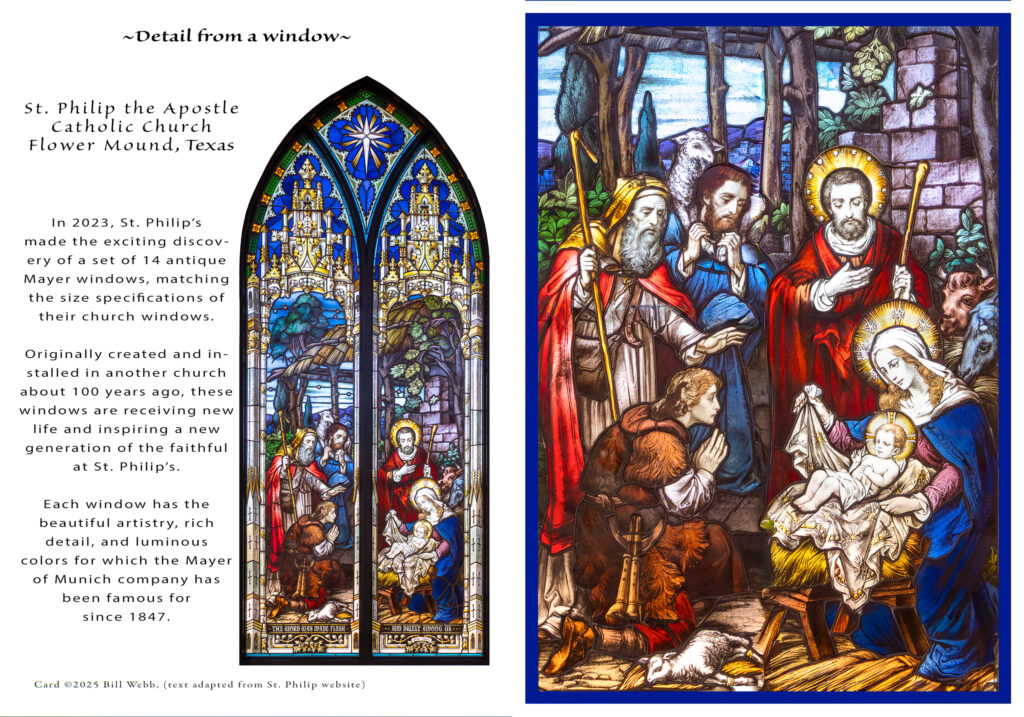
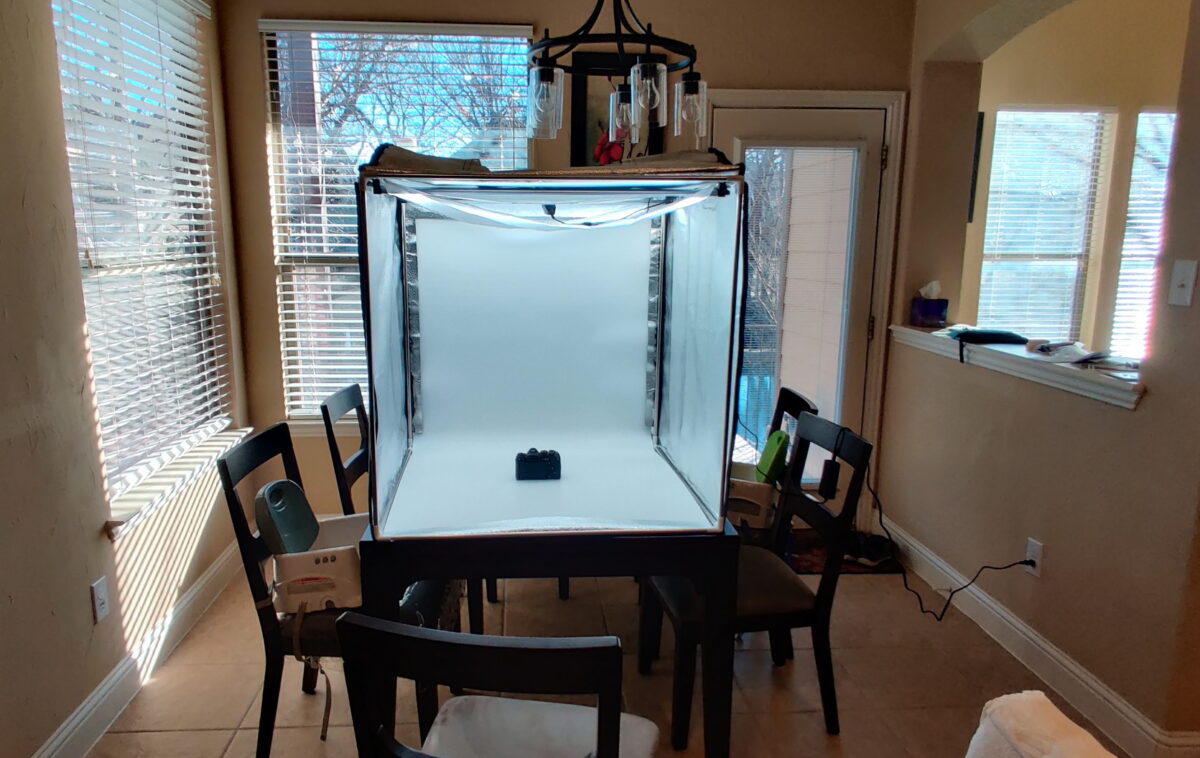
Ah, the printing. Dedicated photo printers are not designed for bulk feeding of paper (at least not the ones I’ve owned) so I have to feed each piece of card stock one at a time. Because I print 125 cards, the printing process takes several hours. I print all of the insides first (the greeting portion of the card) and then print the outsides and front, the image side. Because I set the printer to max quality, each card takes 2+ minutes for the inside and about 3½ minutes for the outside (the front), so about 6 minutes to print each card.
There are also 125 envelopes to be addressed, and I do that by running Microsoft Word mail merge. Thankfully, each envelope takes only 15 or so seconds to print, but still hand fed.
How long does the whole process usually take each year?
As you can see from the information above, the process is likely considerably more involved than most folks, especially non-photographers, might realize. However, the longest pole in the tent is not the design or the printing, it is finding a new window for that year. That can take weeks to months. I’ll set that aside because it is so variable.
Working on the image in Lightroom takes from 6 to 8 hours. Building up the layers of the card (greeting, window story, background layers for the image, etc.) in Photoshop takes 2 to 4 hours. Proofing the image and selecting the paper and setting the background color takes another couple of hours. Then there is that printing process that takes about 10 to 12 hours but that is spread over several days. So, 10 to 16 hours to get the first one through the printer and several days to complete the last one.
What tools, gear, or printing methods do you use for the photography and production side of things?
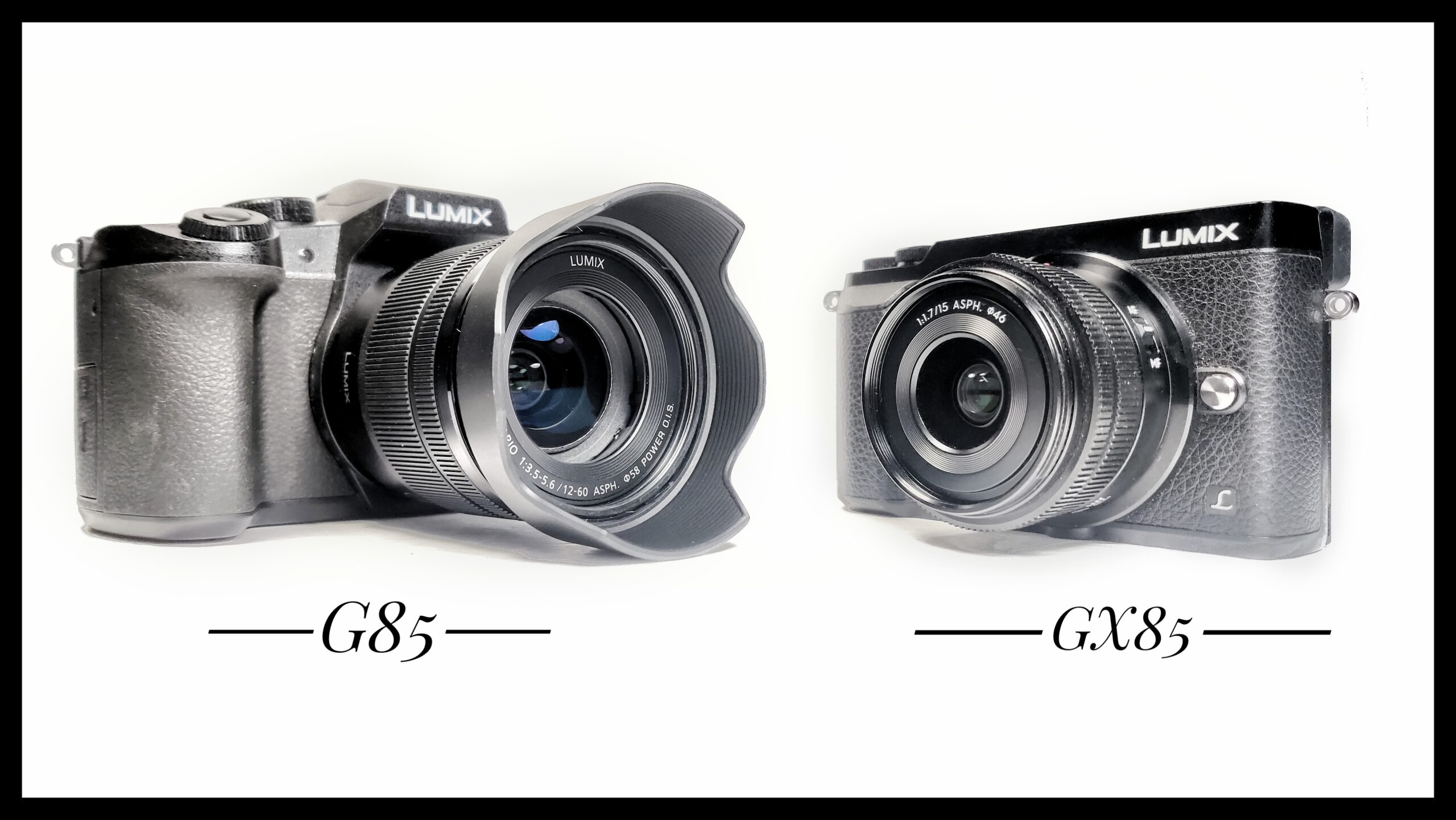
My gear for capturing the images these days is a Sony A1 II and a 24-105 f/4 lens. The images are processed first in Lightroom for exposure and white balance and the card is constructed in Photoshop. Printing is done using an Epson P600 Surecolor photo printer. A favorite paper is 60# Polar Matte from Red River Paper.
Has your style or approach changed over the years, or do you follow a familiar rhythm each holiday season?
The rhythm is similar, but the pacing has changed. Finding an appropriate window involves a lot of luck along with some research, so that search effort starts much earlier than in years past. Actually, now I am always on the lookout and asking people about stained-glass windows that might make a good card. The St. Philip Catholic Church window that will be featured in 2026 is one I learned of from my dental hygienist back in October while we were chatting after my appointment.
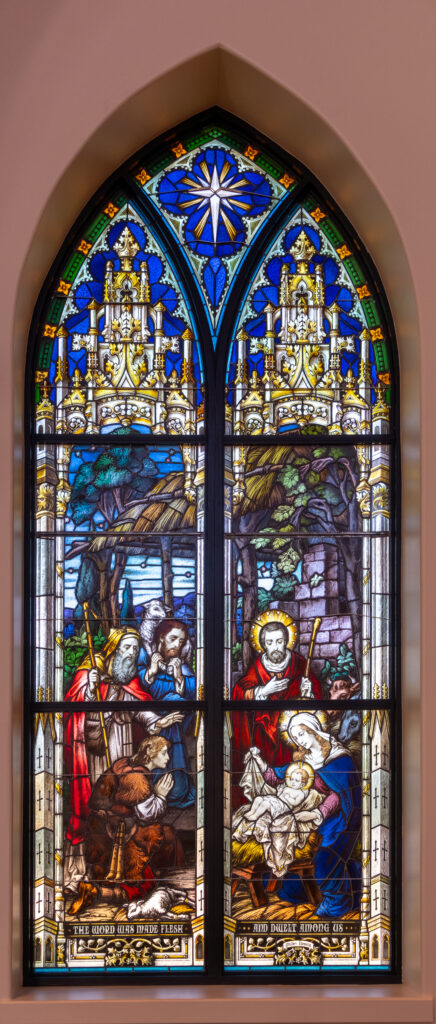
As to style, years ago I was using the entire window [Photo 10] but in recent years I have been cropping to the main scene that tells the nativity story without too much to distract the viewer. The photo of the full window at St. Andrew Anglican was taken 12 years ago and was the front of our 2014 card. Compare that to [Photo 5] which is the portion of the window that was selected for our 2023 card.
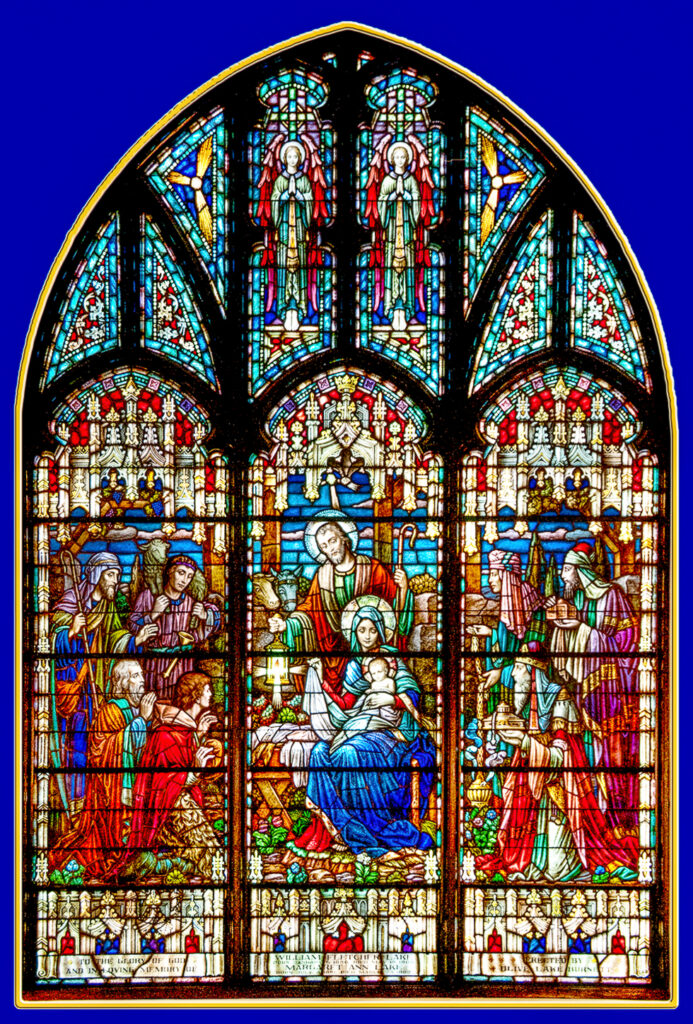
Also, early on I was not removing the support bars and heavy seams from the scene. The tools (particularly the selection tools) available in Photoshop were not nearly as good then. I think the elimination of those distracting elements improves the image and ensures that the viewer sees the image as the artist intended. Compare [Photo 10] to [Photo 5] to see the same window as it was used on different cards – 2014 and 2023.
What do you hope people feel when they open your card? Why is this tradition meaningful to you?
I hope people feel a moment of peace, real peace, and a quiet sense of hope that steadies them. In a season that can pull us in a dozen directions, I want my card to be the pause we all forget to take. The occupants of that stable so long ago knew what it was to be weary and uncertain and overwhelmed just as we can be today. If the card can offer just a brief time of ease to the recipient, I am happy. This tradition matters to me because offering comfort, even briefly, feels like participating in the very heart of Christmas.
Bill’s Christmas Card Process (Simplified)
- Start with the message
Decide on the feeling and meaning you want the card to convey. - Find a stained-glass window
Research and visit churches until the right nativity window presents itself. - Photograph the window
Capture the full window and tighter compositions of the main scene. - Bracket exposures
Shoot multiple exposures to ensure balanced highlights and detail. - Edit for accuracy
Adjust exposure and color in Lightroom, then remove distractions in Photoshop. - Design the card
Crop the image, add the greeting, and include a short description on the back. - Choose the paper
Test papers and select the one that best suits the image. - Print by hand
Print each card individually, inside and out. - Address and mail
Print envelopes and send the cards to friends and family.
Bill’s Christmas card tradition is a reminder that photography doesn’t always need an audience or a deadline to matter. Sometimes its greatest purpose is simply to connect people. Through patience, craft, and intention, Bill turns light passing through stained glass into something that can be held, shared, and remembered.
What stands out most is not the time it takes or the tools he uses, but the care behind every decision. Each card carries a message of peace, hope, and quiet reflection, offered without expectation. In a season that often feels rushed and noisy, his work invites us to slow down and take a breath.
For me, this tradition reflects the same sense of warmth and community I experienced growing up. It’s a small act with a lasting impact, and a beautiful example of how photography can serve something greater than itself.