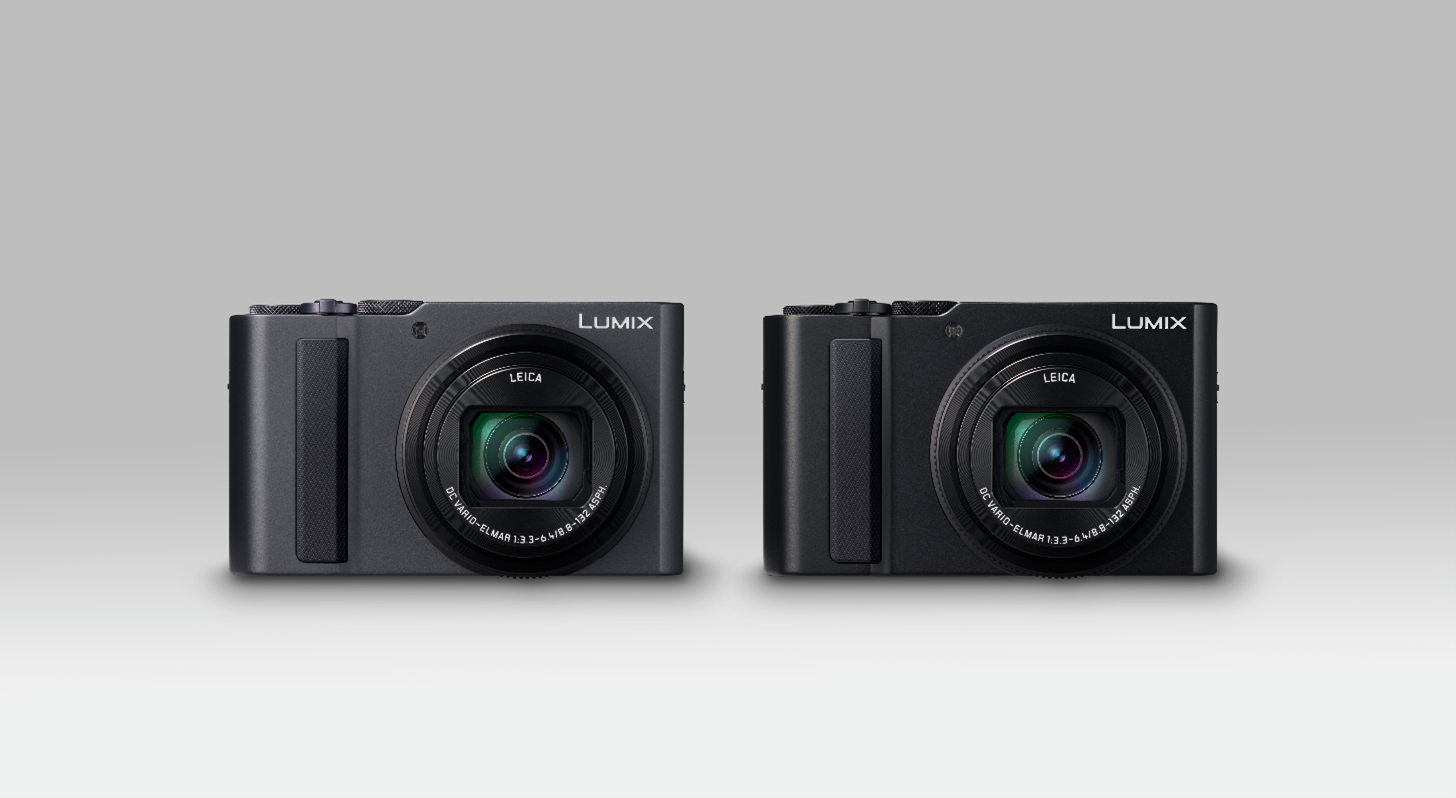
Where the TZ300 fits today
The Panasonic Lumix TZ300 is one of those cameras that feels like it belongs to a different time. Not because it’s outdated, but because the space it occupies has mostly disappeared. Phones have taken over casual photography, and dedicated cameras have moved toward larger sensors and more specialized use. Cameras like this used to sit comfortably in the middle.
So the real question isn’t just what the TZ300 does. It’s whether a camera like this still has a place. What makes this one interesting is that it doesn’t feel entirely new. It feels more like a continuation of what Panasonic already had with the TZ200, with a few small changes layered on top. The core idea hasn’t changed.
The zoom is still the main reason
On paper, the TZ300 is easy to understand. You get a 20-megapixel 1-inch sensor paired with a 24–360mm equivalent zoom lens. That 15x zoom range is the defining feature. It gives you wide-angle coverage for general shooting and enough reach to isolate subjects at a distance, all in a body that’s small enough to fit in your pocket.
What makes that zoom useful isn’t just reach. It’s how it affects composition. A wide focal length gives you context and environment. As you zoom in, you simplify the frame. At the long end, you compress the scene and isolate details that would otherwise get lost. This is something phones still struggle to replicate in a continuous way.
Most phones rely on a few fixed focal lengths. Anything in between is handled digitally. The TZ300 gives you full optical control across the entire range, and that changes how you approach a scene.
Lens and image quality
The lens on the TZ300 is really about consistency and flexibility rather than pushing for the best possible image quality. Based on what this camera is and how similar Panasonic compact zooms have performed, it’s reasonable to expect fairly consistent results across the zoom range. Cameras like this aren’t designed to be optically perfect. They’re designed to give you usable results no matter where you are in that 24–360mm range. That’s really the tradeoff. You get range and convenience, and in return you accept that this isn’t going to match a prime lens or a larger system.
In terms of image quality overall, this is where the TZ300 still separates itself from a phone. At the wide end, the difference is usually not dramatic. Phones have gotten very good here. But once you move into longer focal lengths, that’s where a camera like this starts to make more sense. Having real optical zoom gives you more flexibility, and the images tend to hold together better compared to digital zoom from a phone.
The TZ300 also uses a backside-illuminated (BSI) sensor, which should give it a slight advantage over older models like the ZS200 in lower light. In practice, this is likely to be a small improvement rather than something that completely changes how the camera performs.
TZ300 vs ZS200 (TZ200)
The TZ300 is often compared to the ZS200 (TZ200), and the differences are worth understanding. I’ve already spent time with the ZS200, and I wrote about it in more detail here:
https://www.openfilmmaker.com/panasonic-lumix-zs200-review/
That context makes the TZ300 easier to understand, because it doesn’t really feel like a completely new camera. It feels like a variation of the same idea.
The ZS200 is the more complete camera. It uses a similar sensor and essentially the same lens, but it includes an electronic viewfinder and feels more refined overall. It’s easier to use in bright conditions and comes across as a more balanced product.
The TZ300, on the other hand, feels like a simplified version of that camera. It keeps the same core experience but removes some features along the way, while adding a minor sensor update.
Here’s how they compare:
| Feature | Panasonic TZ300 (ZS300) | Panasonic ZS200 (TZ200) |
|---|---|---|
| Sensor | 1-inch, 20MP (BSI) | 1-inch, 20MP (standard) |
| Lens | 24–360mm (15x zoom) | 24–360mm (15x zoom) |
| Aperture | f/3.3–6.4 | f/3.3–6.4 |
| Image Quality | Slight low-light improvement expected | Very similar overall |
| Viewfinder | ❌ None | ✅ Included |
| Screen | Fixed LCD | Fixed LCD |
| Video | 4K (cropped), basic stabilization | 4K (cropped), similar |
| Autofocus | DFD contrast detect | DFD contrast detect |
| Charging | USB-C | Micro USB |
| Body | Slightly updated | Original design |
| Overall | Simpler / stripped down | More complete package |
The missing EVF on the TZ300 is the most noticeable change, and it’s hard to ignore. It’s one of the reasons the camera feels like a step down rather than a clear upgrade.
At the same time, the overall shooting experience is likely to feel very similar. You’re not getting a completely different camera. You’re getting a slightly adjusted version of what already existed.
Low light limitations
The limitations of the TZ300 are fairly easy to predict based on the lens and sensor combination.
The lens starts at f/3.3 and drops to f/6.4 at the telephoto end. That means as you zoom in, you lose light quickly. In good lighting, this isn’t an issue. But once the light drops, you’ll likely need to raise ISO or slow your shutter speed, both of which affect image quality.
The updated sensor may help slightly, but this is still a camera that’s primarily designed for good lighting conditions.
No viewfinder
The lack of an electronic viewfinder is one of the more noticeable drawbacks.
In bright sunlight, rear LCD screens can be difficult to see, and since the screen doesn’t tilt, there’s limited flexibility in how you compose your shot. This is one of those things that may not seem important at first, but becomes more noticeable over time. It’s also harder to ignore when the previous model included one.
Video and general performance
The TZ300 can shoot 4K video up to 30 frames per second, but there is a noticeable crop, which reduces how wide your shots can be. Stabilization is expected to be usable, but not on the level of newer cameras, and autofocus is based on Panasonic’s contrast-detect system.
It should be fine for casual use, but video is not the main reason to choose a camera like this. Battery life, based on this class of camera, is generally solid and should hold up well for extended shooting.
Final thoughts
The TZ300 exists in a space that has become harder to justify.
Phones are more convenient and continue to improve. Larger cameras offer better image quality and more flexibility. That leaves cameras like this somewhere in between. While I’m not a fan of the lack of an EVF, the average video stabilization, and the fact that it feels like a slightly watered-down version of the ZS200, it’s still not a bad camera.
It makes the most sense if you’re looking for something separate from your phone. Not to replace it, but to give you a different way to shoot. It’s a point-and-shoot travel camera that gives you real zoom and more natural-looking images, especially once you move beyond the wide end.
If your goal is to practice photography a bit more, think about composition, and have more control over your framing, the TZ300 does that well without getting complicated.