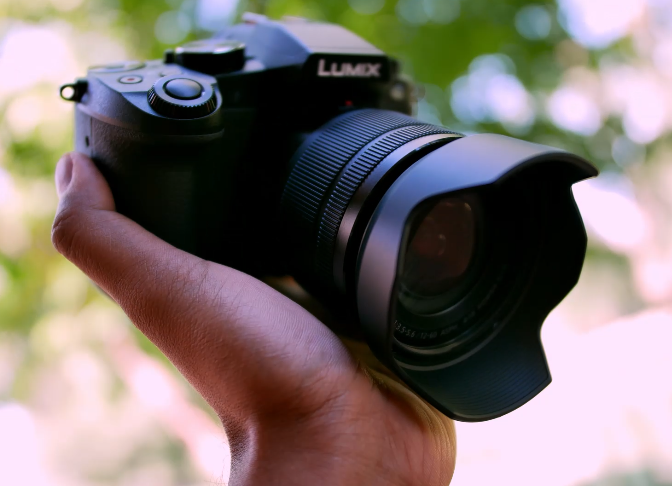
(Panasonic + Olympus / OM System)
If you’re getting into photography or video in 2026, Micro Four Thirds probably isn’t the system you hear about the most. Most of the conversation today leans toward full frame cameras, larger sensors, and spec comparisons that make smaller systems feel like a compromise.
But once you actually start shooting, that narrative begins to shift.
What matters more is whether you bring your camera with you, how easy it is to use, and whether it fits naturally into your day. That’s where Micro Four Thirds still stands out. It’s a system built around balance. Smaller bodies, lighter lenses, and features like strong stabilization make it easier to focus on the act of shooting rather than managing the gear.
I started with the Panasonic G7 back in 2017. It was simple, capable, and gave me everything I needed to learn. Over time, I’ve used larger and more expensive systems, including full frame, but I keep coming back to Micro Four Thirds for one reason: it’s easier to live with.
In 2026, that still matters more than most people think.
Why Micro Four Thirds Still Works for Beginners
When people compare cameras, they often start with specs. Sensor size, dynamic range, autofocus systems. All of that matters, but it doesn’t always translate into a better experience, especially when you’re just starting out.
What tends to matter more is how the camera fits into your life. A smaller body means you’re more likely to carry it. Better stabilization means you can rely on handheld shots without constantly thinking about technique. A more affordable system means you can experiment without feeling like every decision is expensive.
Micro Four Thirds has always leaned into that balance. It doesn’t try to win every comparison, but it does a lot of things well enough that you stop thinking about the gear and start focusing on what you’re capturing.
The Cameras Most People Start Looking At
As you start exploring Micro Four Thirds, a few cameras come up again and again. Some of them make immediate sense for beginners, while others are more aspirational or specialized.
The Panasonic G100 is usually one of the first options people consider. It’s small, approachable, and designed to be easy to use right away. It feels more like an entry point than a long-term investment, but that’s exactly what some people need.
Then there’s the Panasonic G97, which sits in a more traditional camera category. It has a DSLR-style body, more physical controls, and enough flexibility to handle both photography and video without leaning too far in either direction. It’s the kind of camera that invites you to learn.
The GX85 and GX9 show up in a different way. They’re smaller, more compact, and built around a rangefinder-style design. These are the cameras people start looking at when they realize they don’t want to carry something bulky all the time.
On the OM System side, the OM-5 stands out as a more refined option. It’s still compact, but it adds weather sealing, stronger stabilization, and a level of polish that makes it feel like something you can keep for a long time.
At the same time, there are other cameras in the system that are harder to ignore. The OM-1 pushes performance much further, especially for wildlife and action. The GH7 leans heavily into video. The G9 II brings modern autofocus and speed into the Panasonic lineup. Even something like the OM-3 starts to shift the conversation toward design and experience rather than just capability.
All of these cameras are part of the same ecosystem, but they’re not all meant for the same person.
What Actually Makes a Camera Beginner-Friendly
It’s easy to assume that a more advanced camera is automatically better, but that’s not always how it plays out in practice.
A beginner-friendly camera is not just about features. It’s about how approachable it feels. Can you pick it up and start shooting without needing to understand everything? Does it give you room to grow without forcing complexity on you too early? Does it encourage you to take it with you instead of leaving it behind?
Some cameras are powerful but intimidating. Others are simple but limiting. The best beginner cameras tend to sit somewhere in the middle, where they feel easy to use at first but still have enough depth to keep you interested over time.
That balance is where Micro Four Thirds has always been strong.
A Few Cameras That Don’t Quite Fit (Yet)
It’s worth acknowledging that not every camera in the system makes sense for someone just starting out.
The GH7 is a great example. It’s one of the most capable video cameras in the system, but it’s built for creators who already know they need those features. For a beginner, it can feel like too much too soon.
The OM-1 is another. It’s an incredible camera for wildlife and fast action, and in the right hands it can produce results that feel far beyond what most people expect from Micro Four Thirds. But it’s also expensive and designed around scenarios that beginners usually aren’t dealing with yet.
The G9 II sits somewhere in between. It brings modern autofocus and performance improvements, but it’s still more camera than most beginners need. It starts to make more sense once you’ve already developed a shooting style.
The OM-3 is different. It’s less about performance and more about the experience of using the camera. It reflects a direction that many people want the system to move toward, but it’s not necessarily the most practical starting point.
All of these cameras are important, but they make more sense later in the journey.
Comparison Table (What Actually Matters)
| Camera | Best For | Strengths | Tradeoffs |
|---|---|---|---|
| OM-5 | Travel, everyday photography | Compact, weather sealed, excellent stabilization | Autofocus not class-leading |
| G97 | Learning and versatility | Balanced, flexible, easy to grow into | Not specialized |
| G100 | Entry-level simplicity | Lightweight, approachable | Limited long-term depth |
| GX85 / GX9 | Portability | Small, discreet, fun to carry | Fewer modern features |
So Which One Should You Actually Buy?
At some point, it helps to stop comparing and just make a decision.
If you want something simple that lets you get started without overthinking it, the G100 is a strong place to begin. It lowers the barrier to entry and makes it easy to pick up the camera and start shooting.
If you want one camera that can teach you everything and still hold up as you improve, the G97 is probably the most balanced choice. It gives you room to grow without feeling overwhelming.
If you value portability above everything else and want a camera you’ll actually carry every day, the GX85 or GX9 makes a lot of sense. These are the cameras that tend to stay with you.
If you’re thinking longer term and want something that feels more refined from the start, the OM-5 stands out. It offers a combination of size, durability, and capability that can carry you much further without needing to upgrade.
Final Thoughts
Most beginners don’t struggle because they chose the wrong camera. They struggle because they chose something that felt too complex, too expensive, or too intimidating to use regularly.
The best camera is not the one with the most features. It’s the one that becomes part of your routine. The one you bring with you without thinking. The one that helps you build momentum instead of slowing you down.
Micro Four Thirds still excels at that.
And in 2026, that’s a big part of why it still matters.