Introduction
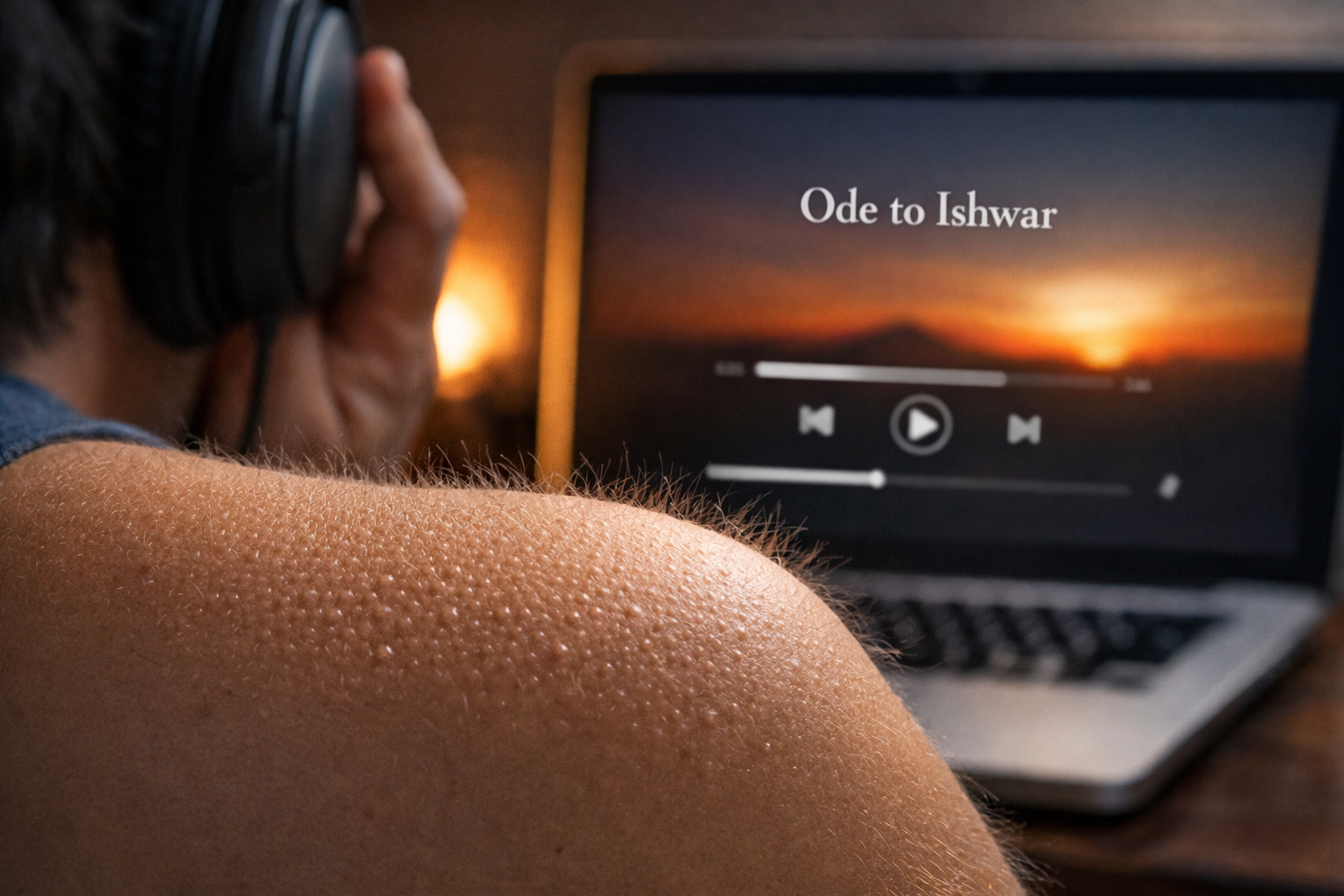
Over the years, I’ve noticed something that surprised me. Every once in a while, I’ll be listening back to one of my own tracks, sometimes something I wrote years ago, and I’ll suddenly get goosebumps. A few songs even hit me emotionally in ways I didn’t expect. One particular piece has made me tear up more than once, even though I was the one who created it.
At first, I didn’t know what to make of it. Was it nostalgia? Was it just mood? Or was there something happening psychologically when creators revisit their own work? Naturally, curiosity kicked in. I started reading about how music affects the brain and why certain creative pieces, especially ones we personally create, can trigger strong emotional reactions. What I found was fascinating and surprisingly relatable.
The “Chills” Response Is Real
There is actually a scientific term for the goosebumps we sometimes get from music: frisson. Researchers have found that during emotionally powerful musical moments, the brain can release dopamine, the same neurotransmitter associated with reward, anticipation, and meaningful experiences. That helped explain something I had felt many times. The chills often show up right at a musical transition, a vocal entry, or a moment where emotion suddenly resolves. It is almost like the brain recognizes something powerful before we consciously process it. What interested me even more was the idea that for creators, the reaction can sometimes be stronger because we are not just hearing the finished piece. We are also reconnecting with the emotional state we were in when we created it.
Listening Back Is Sometimes Like Meeting an Older Version of Yourself
One concept I came across is often described as emotional encoding. When we create something, whether it is a song, photograph, or film, we tend to embed the emotional context of that moment into the work itself. Later, when we revisit it, those same emotional pathways can reactivate. That idea immediately made sense to me. Some of the songs that affect me the most are tied to very specific periods of life, moments of reflection, growth, stress, faith, or gratitude. Listening back does not always feel like just listening to audio. Sometimes it feels like reconnecting with a version of myself from that time.
Why Some Songs Become More Emotional Years Later
Another thing I noticed, and later read about, is that certain pieces do not fully hit emotionally until years after they are created. As life changes, the meaning attached to older work can deepen. Something that once felt like a simple creative exercise may later represent a much larger chapter of personal history. That might be why a track that once felt normal during production suddenly feels powerful when heard again later. The work did not change, but the person listening did.
What This Taught Me as a Creator
I do not consider myself an expert in emotional psychology, but learning about these ideas changed how I view those moments when my own work affects me. Instead of wondering why it happens, I have started to see it as a sign that something real made its way into the piece during creation. I have also realized something many artists quietly observe over time. The pieces that move us personally are often the same ones that later resonate most with other people. There is something about emotional honesty that travels farther than technical perfection.
Final Thought
If you have ever felt unexpectedly emotional listening to your own music, reviewing your photography, or watching something you created years ago, you are not alone. In many cases, it simply means you captured something authentic in that moment, something connected to who you were, what you felt, and what you were trying to express. Sometimes goosebumps are simply the brain’s way of saying that there is something meaningful here.
References
This article reflects a creator’s learning journey and includes selected academic references for readers interested in exploring the neuroscience of emotional responses to music.
Blood, A. J., & Zatorre, R. J. (2001). Intensely pleasurable responses to music correlate with activity in brain regions implicated in reward and emotion. Proceedings of the National Academy of Sciences.
https://pmc.ncbi.nlm.nih.gov/articles/PMC58814/
Salimpoor, V. N., Benovoy, M., Larcher, K., Dagher, A., & Zatorre, R. J. (2011). Anatomically distinct dopamine release during anticipation and experience of peak emotion to music. Nature Neuroscience.
https://www.nature.com/articles/nn.2726
Juslin, P. N., & Västfjäll, D. (2008). Emotional responses to music: The need to consider underlying mechanisms. Behavioral and Brain Sciences.
https://www.cambridge.org/core/journals/behavioral-and-brain-sciences/article/emotional-responses-to-music-the-need-to-consider-underlying-mechanisms/
Koelsch, S. (2014). Brain correlates of music-evoked emotions. Nature Reviews Neuroscience.
https://www.nature.com/articles/nrn3666